I was tasked with producing an hour long ‘do-torial’ alongside other members of my course; teaching a skill, producing a collaborative work or inviting discussions, all based on our fields of research or practice. This term I have been researching into Optics, particularly in 17th century alchemical practice, with alchemists such as Robert Fludd and John Dee. My research took me all the way back the 11th century with Optician and Mathematician Ibn al Haytham. Due to a disagreement with the Caliph of Egypt, Haytham was imprisoned for decades, during which time, he studied the workings of light; producing The Book of Optics and set the foundations for Modern Optics and the scientific method. One of the things he studied most of all was the Camera Obscura, a darkened room with a small aperture in the window where light is let in, creating an upside-down projection of the world outside.
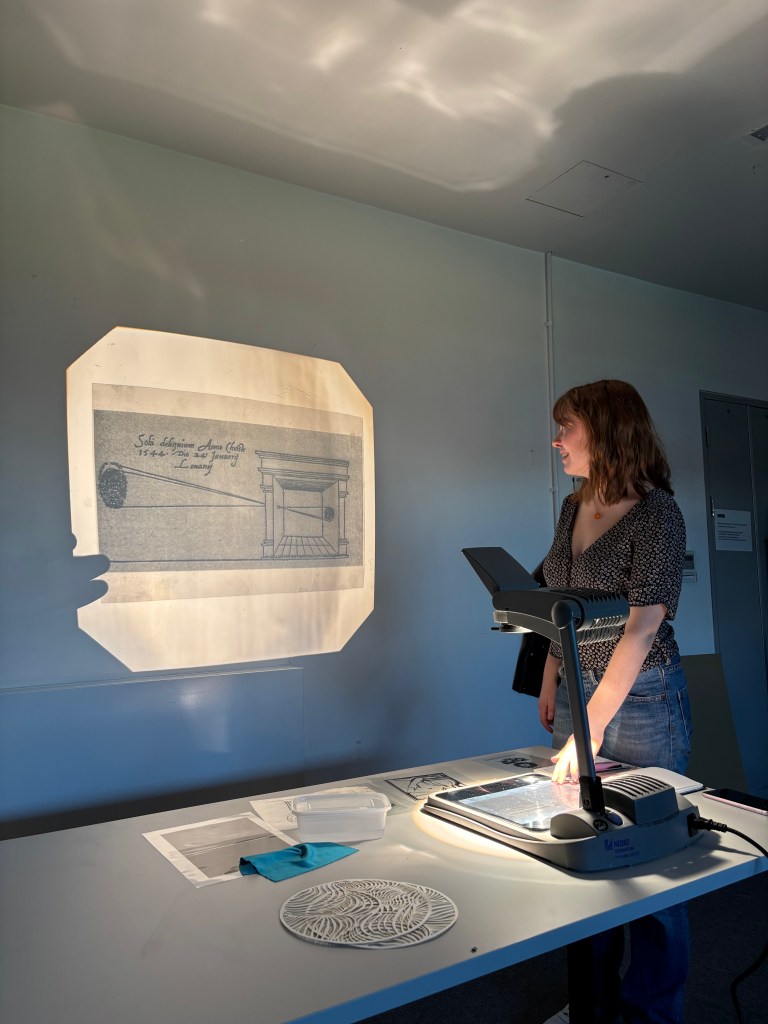
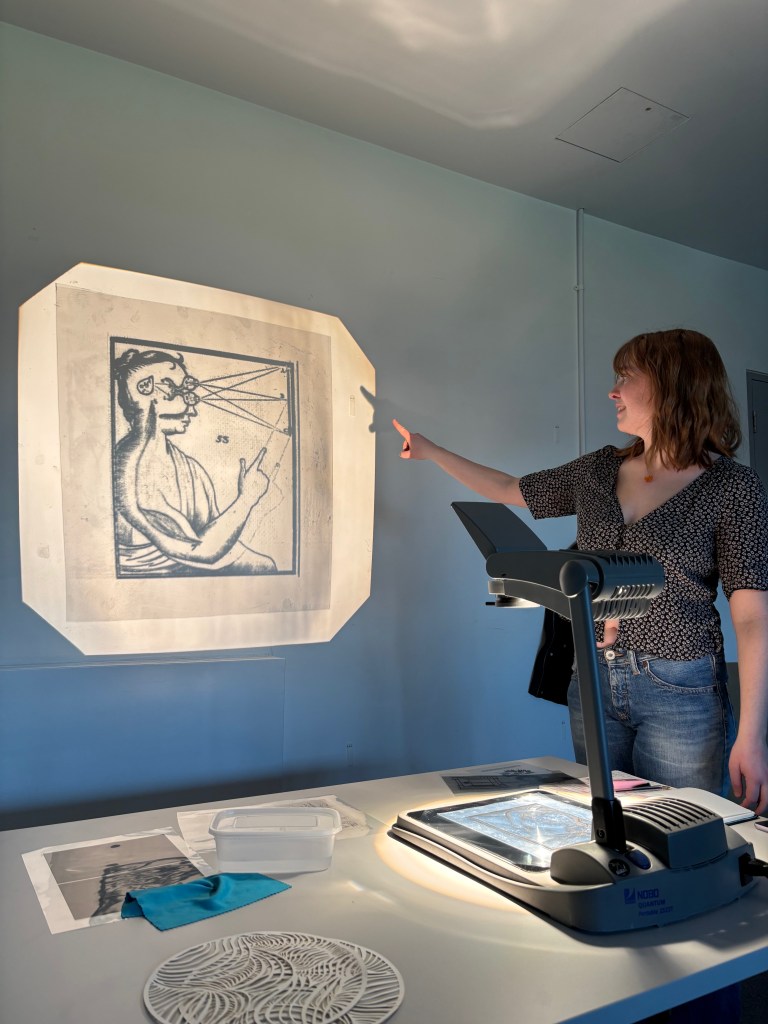
Since the making of the Camera Obscura is extremely lofi, I decided to make one collaboratively as a part of my do-torial. This began with a short presentation on the history of the camera obscura, for this I utilised an Overhead Projector; continuing the theme of the lofi nature of these physics’ experiments, as well as, presenting the physicality of light during a presentation on the nature of light.
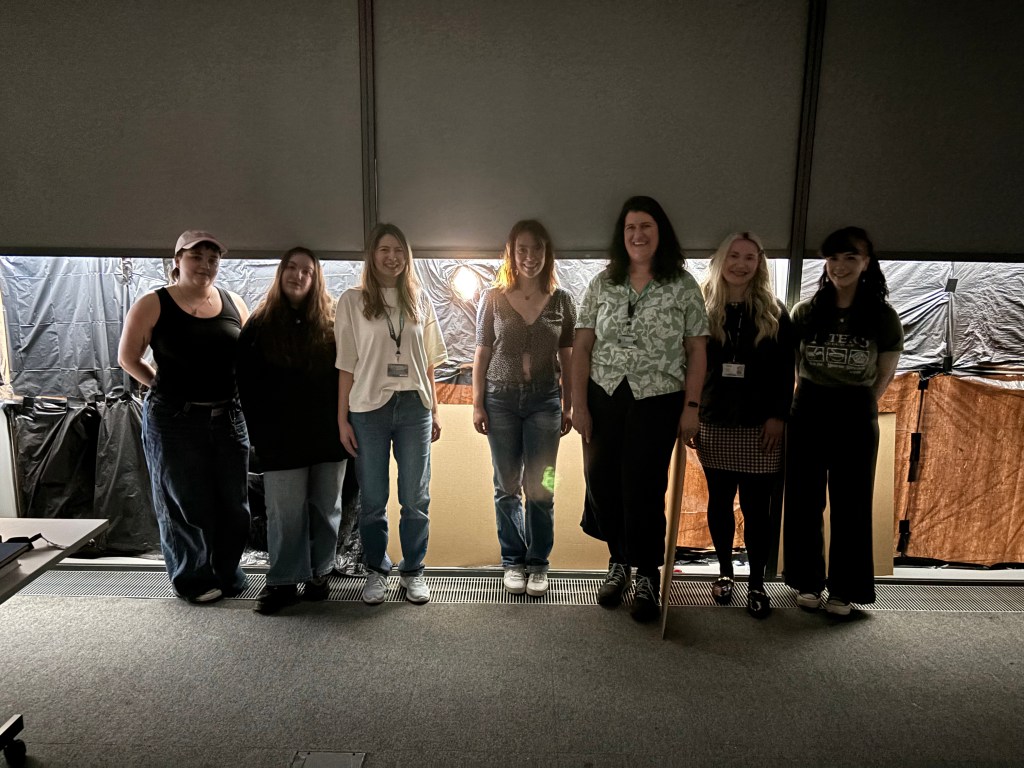
After the presentation, we all got started on blacking out the windows, for this, I brought along two roles of bin bags and tape. Since the windows were so large, the workshop required a lot of team effort. Unfortunately, there weren’t enough bin bags to cover all of the windows, this meant that everyone got very resourceful: using coats, banners and cardboard to cover the remaining light sources.
I had anticipated making the making of the Camera Obscura would be a fast process, however, it took 45 minutes, despite there being 10 of us. In creating the aperture, the Camera Obscura was extremely successful, I explained how the image was flipped because light travels in straight lines and how our own eyes work like a camera obscura and our brains flip the image, so we see the right-side up. I also presented how the aperture works like the aperture of a camera, the wider the aperture, the brighter the image and the less in focus the image is and vice versa.
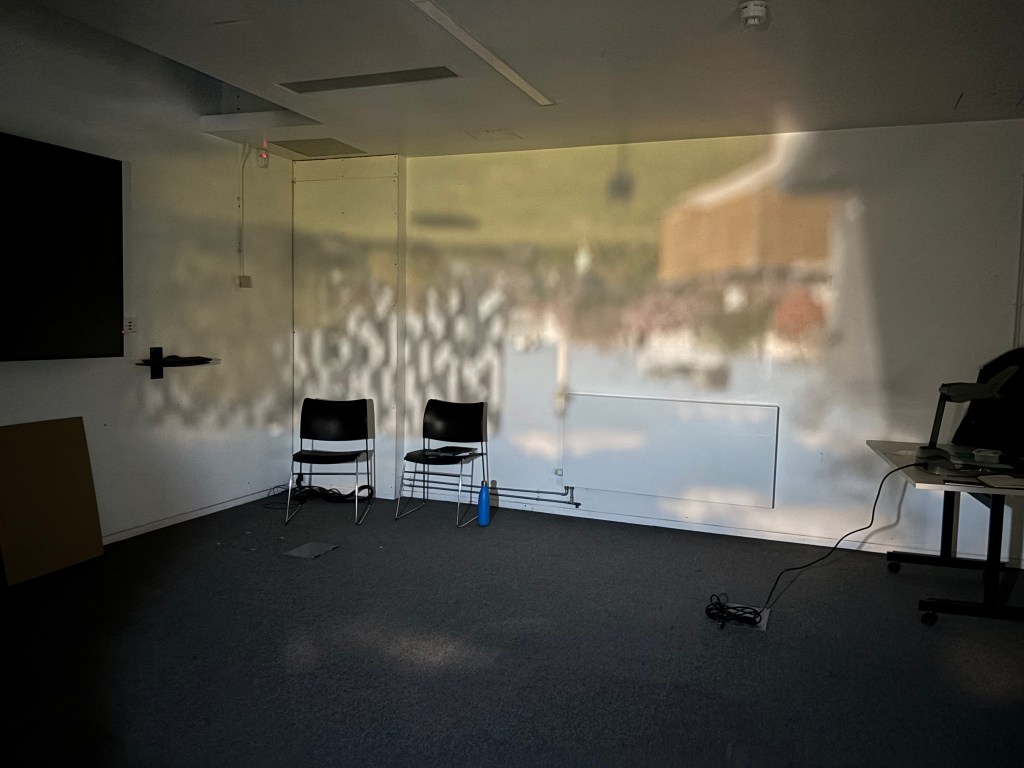
I have created my own Camera Obscura before, but creating one as a team felt even more gratifying and seeing how resourceful everyone became when there weren’t sufficient enough materials was encouraging. The response overall was extremely positive: no one in the group had created one before and most wanted to make their own at home. This meant that everyone had learnt a new skill, and I had informed about the nature of light. Though I recognise that I was surrounded by my fellow students who were all willing participants, the pupils at a primary school may not be as enthusiastic or engaged. However, the enthusiastic response and the thrill of successfully teaching about my own research has given me confidence in my ability to run a workshop and present a multidisciplinary art, alchemy and physics cross-over.
 Orla Fox
Leave a comment